
Overflow Warehousing: Extra Space When You Need It Most
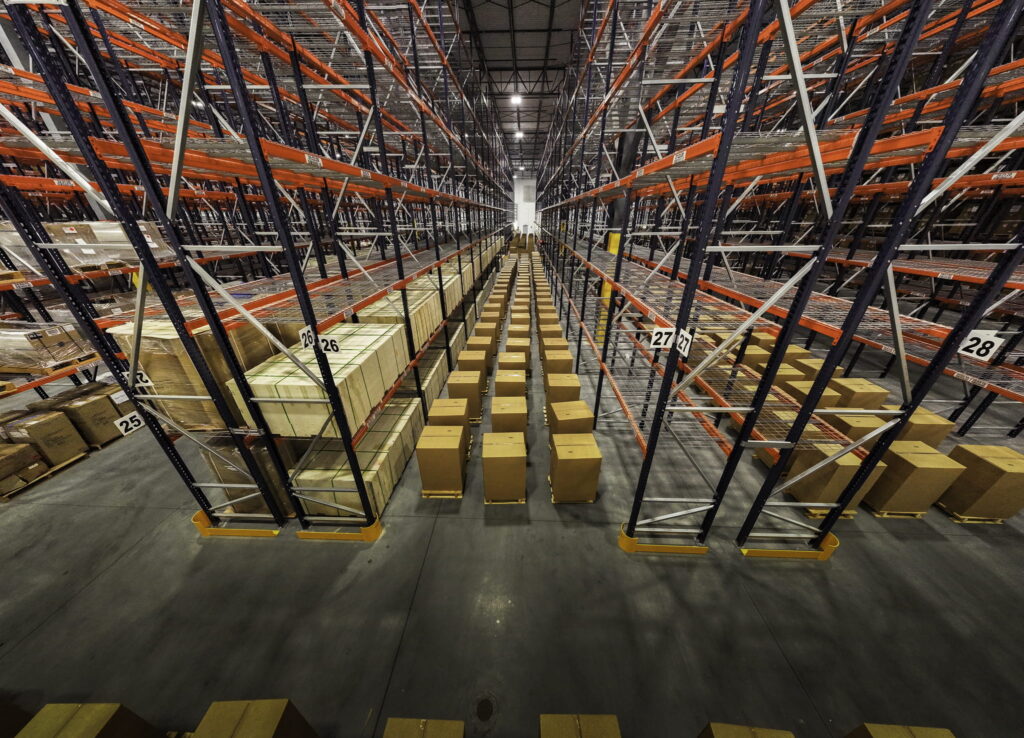
When a warehouse runs out of room, the first fixes are usually improvised. A loaded trailer stays in the yard an extra week. A container sits on its chassis while the carrier’s free days run out. Pallets get stacked two high in a corner nobody can reach without moving three others first.
Each fix feels cheap on the day. Added together, they often cost more than proper space, and for a retail supplier they put something else at risk: stock that is supposed to leave in exactly the shape a buyer asked for. Overflow warehousing replaces improvising with a plan.
TL;DR
- Overflow warehousing is temporary storage outside your main warehouse that absorbs an inventory surge without a long lease or a new building.
- Space is tight right now. US warehouse capacity shrank in September 2026 at its fastest rate since March 2022, while storage prices kept climbing.
- Trailers, containers, and floor stacks make poor storage. They add daily fees, slow down counting, and damage freight.
- For retail suppliers, stock in overflow still has to meet the retailer’s rules, which can change while the pallets wait.
- International manufacturers often use overflow space as their first US base, before retailer orders start flowing.
Overflow Warehousing Defined For Retail Suppliers
Overflow warehousing is storage you add beyond your main warehouse for a limited period, so a surge in inventory has a proper home. The space usually comes from a 3PL provider, and you pay for the pallets you use instead of signing a long lease.
For a direct-to-consumer brand, an overflow warehouse mostly holds reserve stock. For a retail supplier, the goods inside are often already promised to a buyer, with a delivery appointment, a label format, and a pallet build the retailer has set in advance.
Why An Overflow Warehouse Is Harder To Find This Fall
In September 2026, the Logistics Managers’ Index, a monthly survey of US logistics managers, put warehousing capacity at 39.3, its fastest contraction since March 2022. Warehousing prices came in at 73.5, up 7.5 points from a year earlier. On this index, 50 is the dividing line between growth and contraction.
The import calendar adds to the squeeze. The National Retail Federation’s Global Port Tracker expected US ports to handle 2.25 million twenty-foot equivalent units (TEU) of imports in October 2026, up 8.5% from a year earlier. That volume follows an import peak that started early and stretched into the fall. With space scarce and goods arriving early, brands that book overflow before peak shipping season have far more choice than brands that wait.
What Improvised Overflow Warehouse Storage Really Costs
Before signing for extra space, it helps to price the alternatives you may already be using:
| Makeshift Fix | What It Costs You | Why It Hurts A Retail Supplier |
| Trailers parked as storage | Rental or detention charges for every day they sit | No rack locations, so finding one SKU can mean unloading half a trailer |
| Containers waiting on a chassis | Daily charges once free time runs out | Goods sit at the port while the retailer’s date gets closer |
| Floor stacking in aisles | Slower picking and more crushed cartons | Damaged cases can be refused at the retailer’s dock |
| Asking the factory to hold stock | Less control over when goods ship | Your US lead time grows by an ocean crossing |
Container charges are the easiest to underestimate. Demurrage and detention are daily fees for leaving cargo at the terminal or keeping a carrier’s container too long, and, according to the Federal Maritime Commission, nine major ocean carriers collected roughly $15.4 billion in these charges between April 2020 and March 2025. Then there is the labor: every hour your team spends moving pallets to reach other pallets is an hour not spent picking orders.
Interested in our Services? Get a Custom Quote that completely suits your needs.
GET STARTED!
Peak Season Overflow Warehousing For Retail Programs
Retail creates a few space crunches that other sales channels rarely see.
A New Retailer Says Yes
When a buyer adds your line, the opening order has to stock every store and distribution center (DC) at once. That first wave can be far larger than a normal month’s volume, it only happens once per program, and it has to ship on the buyer’s dates.
A Reset Date Moves
Buyers adjust store reset dates as their own plans change, and your finished goods keep arriving on the original schedule. The pallets are built and labeled, but they have nowhere to go until the new date arrives.
Displays Get Built Early
Promotional displays and kits are assembled well before they ship, and they are bulky and easy to crush. They need floor space where nothing gets stacked on top of them.
Overflow Distribution Warehousing Built Around Retail Rules
Pallets in storage do not stay compliant on their own. While they wait, a retailer can update a label format, change a pallet height limit, or revise its routing guide, and stock built to last month’s version can be refused or charged back.
So for retail freight, the overflow partner should be able to open a pallet, relabel cases, and rebuild to the current spec without sending anything back to you. It also helps to see every pallet in real time. Through our technology setup at DPWagner, clients track overflow stock in a web portal and send orders by EDI or API, so a retailer order can go out against it without a phone call to confirm it is there.
Overflow Warehousing And Logistics For Overseas Manufacturers
For manufacturers in India, China, Poland, or the UK, the first US shipment is often a full container that arrives before steady retailer orders do. Overflow space becomes their US base: somewhere to receive, hold, and release stock as purchase orders come in, without opening a US warehouse of their own.
Some of these manufacturers also need a way onto the shelf. For certain brands, we can make introductions to buyers at major US retailers we already work with, so the stock in storage has somewhere to go. In some cases, we also act as the US distributor ourselves, buying the stock at import and selling it through to the retailer, so the manufacturer does not need a US entity to get started.
Overflow Space With A Retail Floor Behind It
DPWagner was a retail supplier before it was a 3PL. Our own products were shipping into Walmart, Home Depot, and Lowe’s long before we took on a single client, and they still are. So the team that stores your surplus can also case pick it, build it to the retailer’s spec, and send it direct to store or DC.
Our Atlanta facility sits about 3.5 hours from the Port of Savannah, with 34 dock doors and no storage or order minimums. When a program outgrows one region, we can add capacity in locations in the West and the Midwest through strategic partners. Our warehousing team will size the space around your next launch or peak build.
Running short on room before your next retailer order? Contact us and we will come up with the perfect overflow warehousing solution for your brand’s needs.
Frequently Asked Questions
Do I have to move all my inventory to use overflow space?
No. Most brands move only the surplus, such as one retailer program, one container, or one season’s build, and keep everything else where it is.
Is it cheaper to keep stock in trailers than in an overflow warehouse?
Rarely for long. Trailer charges add up daily, and goods without rack locations are harder to count, pick, and protect from damage.
Can overflow space hold household chemicals?
Not every warehouse will take them. Our hazmat warehouse in Atlanta is Hazmat Level 2 certified, so cleaning chemicals and abrasives can sit in overflow storage and ship to retail like the rest of your line.
Can you take containers arriving through the Port of Savannah?
Yes! We are about 3.5 hours from the port, we coordinate inbound freight and import scheduling, and our drop trailer spots let arriving loads wait at our facility for an open dock door.
How small can an overflow arrangement be?
With DPWagner, there are no storage or order minimums, so overflow can cover a single retailer launch or one peak season build as easily as a long-term program.