
Retail Chargebacks: Causes, Costs & How To Prevent Them
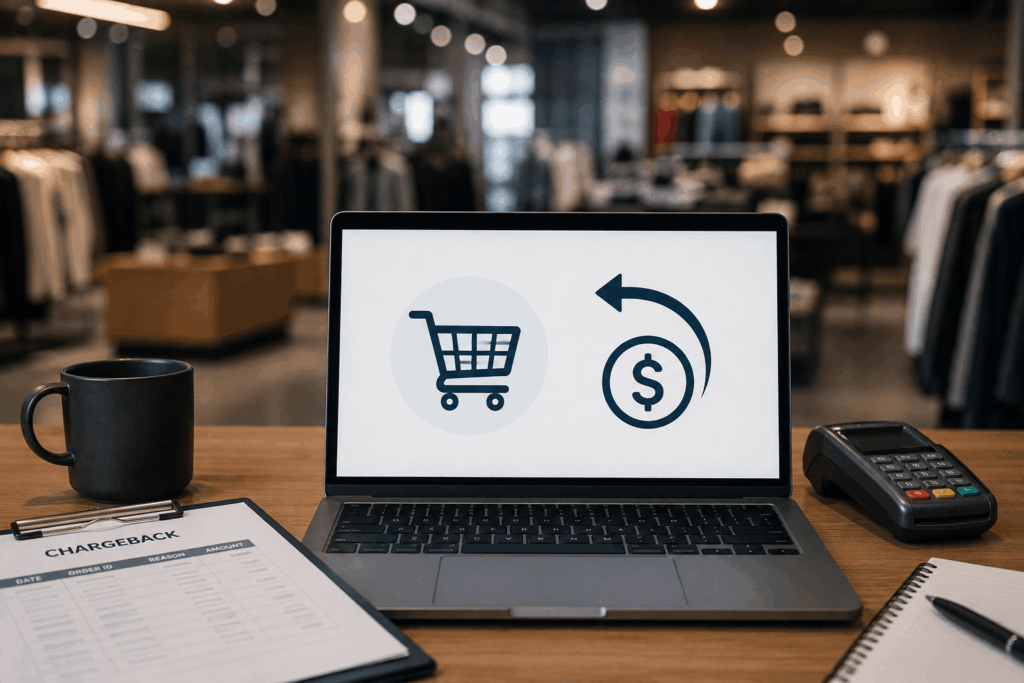
Picture this. You ship a flawless order into a major retailer, the product sells, and then weeks later your payment comes back lighter than expected. A deduction you never saw coming has quietly eaten into your margin.
Sounds familiar? If you sell into big-box retailers, it probably does. Retail chargebacks are one of the most frustrating costs in the business, and they have a way of stacking up fast. Let’s break down what they are, why they happen, what they cost, and how you can reduce them before they drain your bottom line.
TL;DR
- Retail chargebacks are penalties a retailer deducts from your payment when a shipment breaks its compliance rules.
- Most come from packaging, labeling, purchase order, routing, ASN, and fill-rate errors, which are execution problems you can fix.
- They add up fast: deductions can erode as much as 15 percent of gross sales, and an empty shelf costs you the sale on top of the fine.
- Major retailers run their own programs each, and the rules change constantly.
- You can reduce retailer chargebacks and dispute the invalid ones, with the right compliance-led fulfillment partner.
First Things First: What Are Retail Chargebacks?
Let’s start with the basics.
A retail chargeback is a financial penalty a retailer deducts from your payment when a shipment fails to meet its rules. You will also hear them as vendor chargebacks or retailer chargebacks. No matter what you call them, they all point at a fine for not following the retailer’s playbook.
Here’s the catch, though: there isn’t a single playbook. Every retailer writes its own. The rules live inside routing guides and supplier manuals, and they differ from one retailer to the next. Miss a requirement, and the deduction shows up on your remittance, often bundled together as retail deductions and chargebacks.
So, what are chargebacks in retail, exactly? Not customer payment disputes; they are supplier compliance penalties. The good news is they are almost entirely preventable once you know what sets them off.
Why Do Retail Chargebacks Happen?
That’s a good question. And the answer is usually simpler than brands expect.
Most chargebacks in retail trace back to a short list of recurring mistakes. Here are the usual suspects:
Packaging and labeling errors
Wrong case pack, missing barcodes, unscannable tickets, missing labels on polypags, or incorrect UPC and size codes.
Purchase order violations
Shipping the wrong quantity, the wrong product, missing the assigned PO window, or failure to acknowledge the order on time.
Transportation and routing slip-ups
Shipping early, arriving late, ignoring the routing portal, or putting together non-compliant pallets. Retailers schedule dock time and labor around your appointment, so a truck that shows up off-window throws off their whole receiving plan and earns a chargeback.
ASN problems
A late, missing, or invalid advance shipping notice, which retailers penalize quickly because they rely on it to receive product. The ASN tells the distribution center exactly what is arriving and how it is packed.
Fill rate shortages
Failing to ship the full quantity ordered. Fill rate shortages or unauthorized substitutions can be assessed at 5 to 15 percent of the merchandise cost.
Notice a pattern? Nearly every single one of these is an execution problem at the fulfillment level. That is exactly why vendor compliance chargebacks usually signal a process gap rather than plain bad luck.
What Do Retail Chargebacks Actually Cost?
Here’s where it stings. And pretty badly, if you let things amass.
Individual deductions can look small. Yet, if you add them up across a year of purchase orders, the number gets serious. Retailer penalties commonly run a few percent of the invoice, and they pile up quietly, one shipment at a time. How serious? Deductions and chargebacks can erode as much as 15 percent of a supplier’s gross sales, according to industry analysis by Talk Business & Politics.
And that is only the deduction itself. Don’t forget the hidden cost. When your product misses its delivery window, it is not on the shelf when the shopper goes looking. So they grab a competitor’s product instead, and you lose the sale on top of the fine. That missing availability is exactly why retailers crack down so hard. Out-of-stocks and overstocks cost retailers across the US and Canada an estimated $349 billion in lost sales in 2022, and supplier issues were the single largest driver of those losses worldwide.
To sum things up, chargebacks retail penalties quietly chip away at both your margin and your market share.
Interested in our Services? Get a Custom Quote that completely suits your needs.
GET STARTED!
Walmart, Amazon & Target Vendor Chargebacks
Now, let’s talk about the heavy hitters. The biggest retailers run the most structured compliance programs, which is where most suppliers feel the pain.
Take Walmart chargebacks. They center on the On-Time In-Full program, better known as OTIF. Suppliers must hit a 98 percent delivery threshold or face a fine of 3 percent of the cost of goods on non-compliant orders, as reported when the retailer tightened the rule. That leaves almost no room for error, which is why Walmart vendor chargebacks catch so many brands off guard.
Amazon vendor chargebacks work differently, leaning heavily on ASN accuracy, prep and labeling rules, and carton-level requirements. Meanwhile, Target chargebacks enforce routing, packaging, and on-time performance through their own vendor portal.
Each program has its own rules, and those rules change often. Sell across several of these channels at once, and you are tracking multiple routing guides that update on their own schedules.
Would you like to know how DP Wagner stays ahead of it? Simple. We have been shipping our own brands into these same retailers for 30 years now, so when a routing guide changes, we feel it firsthand and apply the update to client work right away.
How To Reduce Retailer Chargebacks
The short, but true answer? Prevention. Here is how to reduce retailer chargebacks before they ever hit your account.
Assign clear ownership
Chargebacks touch logistics, sales, and accounts receivable, yet often nobody owns compliance. Name an internal owner, or hand it to a retail 3PL partner built for vendor compliance.
Know every routing guide cold
Read each retailer’s supplier manual and keep the rules current. What works for one retailer will get you fined by another.
Nail your ASNs and labeling
Accurate EDI, scannable labels, correct ticketing. This is exactly where precise pick, pack, and ship execution pays for itself.
Protect the delivery window
Coordinate with carriers and build retailer-compliant pallets through dependable shipping and logistics so your freight arrives on time, in full.
Do this consistently, and chargebacks will stop being a monthly surprise.
How To Dispute Retail Chargebacks
Here’s something many brands miss: not every chargeback is valid. Retailers make mistakes too, which means you can -and should- dispute retail chargebacks when the evidence is on your side.
The secret? Documentation. Keep time-stamped EDI records, signed bills of lading, and photos of any carrier-side issues. Flag problems through the retailer’s portal in real time rather than waiting for the penalty to land. When you can prove compliance, you can win the dispute.
Turn Chargebacks Into A Compliance Advantage With DPWagner
Recurring chargebacks are not just a cost. They are a signal that something in your fulfillment process needs fixing. And the right partner fixes it at the source.
That’s where DPWagner fits in. We are not just a warehouse. We are a US retail fulfillment partner that lives retailer compliance through our own brands, builds retailer-compliant pallets, manages routing portals, and ships direct-to-store and direct-to-distribution center.
Tired of watching deductions eat your margin? Getting ready to sell into big-box retailers? Let’s talk. Reach out to DPWagner and turn vendor compliance into your competitive edge.
FAQ
What are retail chargebacks?
Penalties a retailer deducts from your payment when a shipment breaks its compliance rules on labeling, packaging, routing, or timing. They are also called vendor or retailer chargebacks, and each retailer sets its own rules.
How can I reduce retailer chargebacks?
Own vendor compliance, know each retailer’s routing guide, and nail your ASNs, labels, and delivery windows. Since most chargebacks are execution problems, a compliance-led fulfillment partner is the fastest fix.
Can I dispute retail chargebacks?
Yes. Retailers make mistakes too. Keep time-stamped EDI records, signed bills of lading, and photos of carrier-side issues, then flag the problem in the retailer’s portal fast. Solid proof wins disputes.
How are Walmart, Amazon & Target vendor chargebacks different?
Each runs its own program: Walmart focuses on its OTIF standard, Amazon on ASN accuracy and carton-level prep, Target on routing and on-time performance. The rules differ and change often.